How to Quote Faster on Job Sites: Close Bids Before Leaving
September 25, 2026 · 15 min read
The contractor who puts a clear quote in the client's hands first usually wins the job. Yet too many trade pros spend their evenings hunched over a kitchen table, squinting at measurements scribbled on 2x4 scraps and typing out manual estimates from memory. It drains your personal time, and by the time you email that estimate two days later, a faster competitor has already locked in the deposit. You shouldn't have to sacrifice your nights to clerical paperwork just to stay booked. Mastering how to quote faster on job site visits is not about cutting corners or pecking at tiny phone keyboards; it comes down to running a disciplined, repeatable field protocol before you put your truck in reverse.
In this guide, you will learn the exact field-tested workflow to build, price, and sign professional proposals in minutes while standing directly with the customer. We will walk through how to convert spoken walkthrough notes into structured line items, protect your margins with pre-set price books, and secure legally binding on-glass signatures right on their phone before backing out of the driveway.
Key Takeaways
- Eliminate evening paperwork and win more bids by presenting professional proposals while customer interest is at its peak.
- Follow a five-step field workflow showing how to quote faster on job site visits without typing notes by hand.
- Convert spoken walkthrough notes and visual site snaps directly into structured line items right on the property.
- Protect your profit margins with pre-configured price books that calculate labor and material markups automatically.
- Close the deal before leaving by capturing legally binding on-glass e-signatures directly on the customer's phone.
Why Slow Quoting Kills Contractor Win Rates and Free Time
Every minute that ticks away between stepping off a client's porch and sending an estimate bleeds revenue. Bids delivered within one hour close at significantly higher rates than delayed estimates. When you tell a homeowner, "I'll get back to you with numbers in a couple of days," you instantly hand over control of the sale. That delay transforms an eager customer into a comparison shopper who starts calling your competitors for lower numbers. Paper notes, greasy business cards, and scrawled dimensions shoved into a cup holder routinely turn into forgotten fittings or missed labor hours, directly underpricing your jobs.
Learning how to quote faster on job site visits stops this bleeding before it starts. Instead of wrestling with numbers at midnight, modern trade pros rely on purpose-built construction estimating software to capture real job parameters instantly, locking down accurate pricing before leaving the property.
The True Cost of the Kitchen Table Estimate
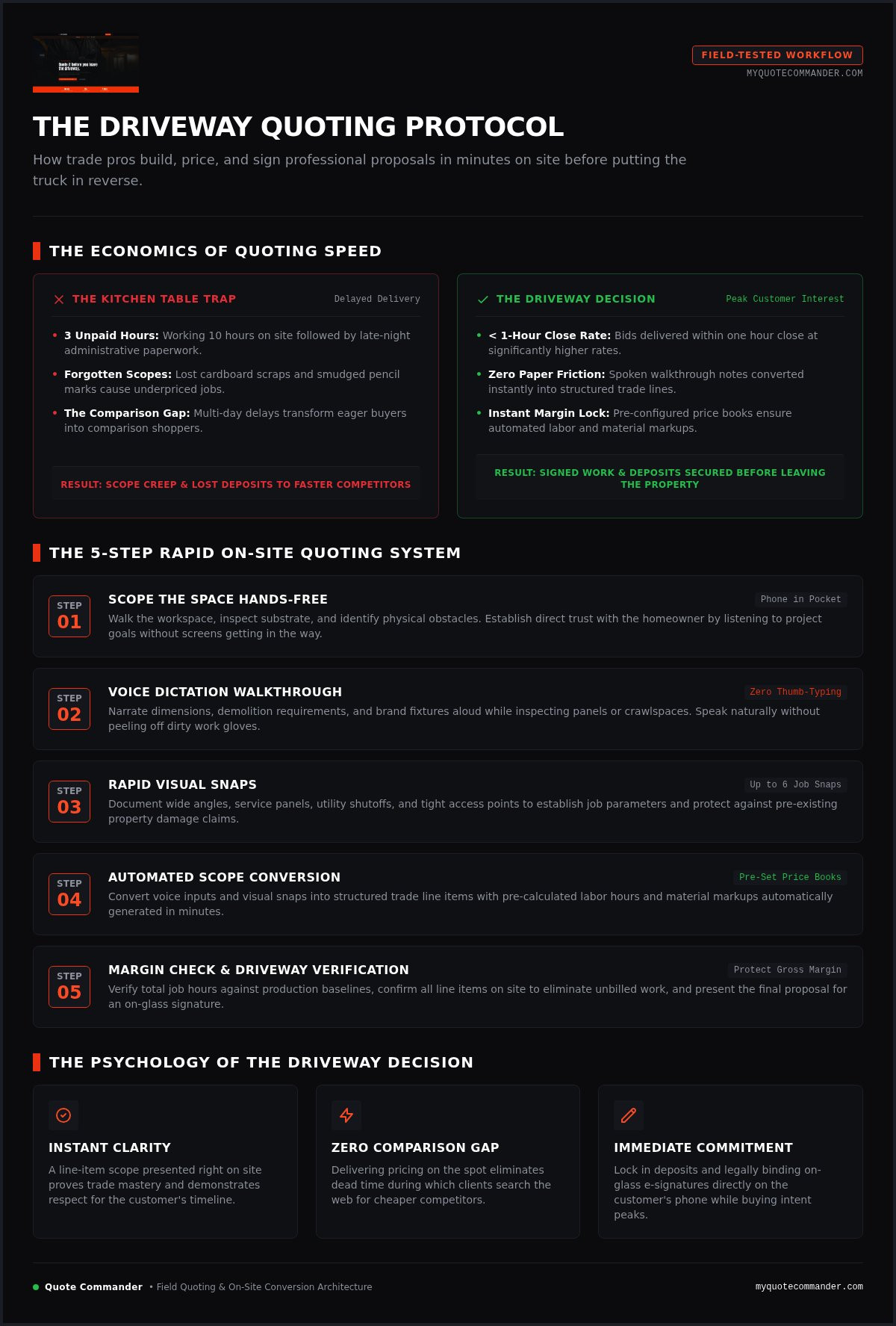
Working 10 hours in the dirt only to spend three hours at your kitchen table doing paperwork is a fast track to burnout. Unpaid evening administrative hours quietly transform high-ticket installations into low-margin headaches. Worse, trying to reconstruct tricky measurements from memory hours later leads directly to scope creep. Cardboard scraps get lost under truck seats. Pencil marks smudge. Homeowners view multi-day quoting delays as proof of poor communication, assuming your field work will drag just as slowly as your paperwork.
The Psychology of the Driveway Decision
Client commitment peaks while you are standing on site discussing their project. Their attention is entirely on their home, their problem is fresh, and their desire to hire a capable professional is high. Leaving without presenting a firm proposal forfeits that momentum, forcing you into days of awkward phone tag and unreturned voicemails.
- Instant clarity: A line-item scope presented right on site proves you know your trade and value your customer's schedule.
- Zero comparison gap: Providing an on-the-spot price eliminates the dead time where clients scour the web for cheaper alternatives.
- Immediate commitment: Knowing how to quote faster on job site meetings lets you capture deposits immediately while the customer is ready to buy.
Eliminating turnaround delays protects your bottom line and wins trust. You walk off the property with signed work, not another unpaid chore waiting at home.
The 5-Step System to Quote Faster on Job Sites
Clunky enterprise software fails on active properties because nobody has time to thumb-type part numbers into ten separate drop-down fields. Much of the long-term decline in construction sector productivity stems from this exact friction, burying skilled trades in administrative drag instead of productive labor. A tight physical routine beats complex software every single time. When you learn how to quote faster on job site assessments, you replace clunky menus with a rapid physical workflow that transforms your site inspection directly into a billable estimate.
Steps 1 and 2: Scoping the Space and Voice Dictation
Keep your phone in your pocket during the first pass. Walk the workspace, inspect the substrate, identify physical obstacles, and establish trust by listening to the homeowner's direct goals. Once the scope is clear, initiate a voice walkthrough. Narrate dimensions, demolition requirements, and exact brand fixtures aloud. Speak naturally while checking panels or crawling crawlspaces without peeling off dirty work gloves. Voice dictation logs spoken specifications instantly, cutting out manual thumb typing entirely.
Steps 3 and 4: Photo Capture and Scope Conversion
Pull out your phone only to document real-world conditions. Take up to six quick visual job snaps covering wide room angles, service panels, utility shutoffs, and tight access points. These visual records protect your team against pre-existing property damage claims. Next, run those voice inputs through an automated conversion system to populate structured trade line items with preset labor hours and material markups automatically. For field teams wanting rapid turnaround, utilizing tools like Quote Commander turns voice walkthroughs and site photos into client-ready bids within minutes.
Step 5: Quick Margin Check and Scope Verification
Review the generated totals before stepping back to the customer. Verifying line items on site prevents unbilled work and protects gross margins. Check three quick items before presenting the bid:
- Production baselines: Ensure total job hours meet your crew's minimum project thresholds.
- Access adjustments: Tap to add dedicated line items for difficult site access, tight stairwells, or extended travel distances.
- Customer requests: Confirm custom hardware or fixture callouts match the homeowner's verbal requests.
Mastering how to quote faster on job site visits means executing these five steps in ten minutes or less, giving you a clean, bulletproof estimate before you start your engine.
Manual Field Entry vs. Automated On-Site Capture
Every recording method introduces mechanical friction on a job site. Traditional paper pads offer quick physical jotting, but they force you to re-type every number into your computer later that evening. On the flip side, bulky enterprise apps demand that you tap through infinite sub-menus while standing on hot gravel or balancing on a subfloor. Real speed in the trades comes down to eliminating data entry entirely while you are in the field. When contractors look at how to quote faster on job site visits, they quickly find that capturing field context hands-free beats typing every single time.
The Downside of Tapping Screens with Work Gloves
Direct sunlight, drywall dust, and sweaty hands make smartphone screens practically useless for heavy typing. Pulling off leather gloves to hunt-and-peck material numbers on a tiny glass keyboard slows down your pace and looks unprofessional. You end up staring down at your phone for fifteen minutes instead of talking face-to-face with the customer. Traditional mobile software forces you to scroll through endless drop-down menus just to pick a simple fitting. That friction breeds typos, missed quantities, and frustration on site.
Why Voice and Visual Records Win in the Field
Speaking a scope of work out loud takes seconds, whereas typing that exact same detail takes ten tedious minutes. Your voice carries deep technical context naturally. You can describe demolition boundaries, conduit routes, and exact product specifications while your eyes stay focused on the physical work area.
- Hands-free accuracy: Speak your walkthrough notes naturally without cleaning grease from your hands or removing protective gear.
- Indisputable proof: Up to six quick visual snaps document existing structural cracks, water stains, and access bottlenecks directly alongside the scope.
- Context retention: Spoken notes preserve nuance that chicken-scratch handwriting leaves out, such as specific client requests or structural quirks.
Automated capture bridges the gap between field reality and office paperwork. If your goal is how to quote faster on job site assessments, stop fighting tiny keyboards. Speaking your scope and taking visual photos captures the full job context immediately, leaving zero administrative debt for the drive home.
Pre-Configuring Your Setup for Instant Field Estimates
You cannot deliver a bid in minutes if you calculate raw material costs from scratch on every call. Rapid field pricing requires pre-loading your operational numbers before you ever park in front of a client's garage. If you want to know how to quote faster on job site visits without sacrificing your margins, build your unit economics into reusable templates ahead of time. When your backend setup contains pre-built assemblies with locked-in profit targets, quoting becomes a matter of confirming job parameters rather than doing math in your head.
Building Pre-Set Trade Assemblies and Material Kits
Stop itemizing individual screws, fittings, and small consumables for every single proposal. Bundle those pieces into standardized installation units, such as a complete 50-gallon water heater replacement kit or a 100-linear-foot fence run. Build your standard markup percentages, fasteners, and disposal allowances directly into each master unit. Review these baseline supply figures every few months to shield your profit margins against wholesale material inflation.
Locking In Accurate Labor Production Rates
Base your labor charges on actual field performance rather than best-case scenarios. If a panel upgrade takes your lead installer five hours on average, write five hours into that task template, not three. Incorporate fixed buffers for staging tools, job-site protection, and final sweeping into every operational assembly. Establish clear tiered add-ons for tight crawlspaces, multi-story carries, or steep grade work so your technicians can account for tough working conditions with one click.
Handling Unforeseen Job Conditions and Hidden Variables
Fast quoting should never leave you exposed to hidden property defects. Protect your business by embedding explicit scope limits into every proposal template:
- Concealed obstacles: Define clear boundaries stating that rotten framing, bad wiring behind drywall, or corroded sub-surface plumbing require written change orders.
- Access limitations: Note that prices assume clear workspace access and functional utility shutoffs.
- Material supply: State plainly that fixture prices apply only to specified contractor-grade equipment.
Locking down these structural rules safeguards your bottom line on every visit. Learn how Quote Commander helps contractors generate instant line-item bids directly from pre-set rate books. When your pricing structure is organized before you step onto the property, mastering how to quote faster on job site meetings becomes simple, consistent, and profitable. Start standardizing your field assemblies today by subscribing at myquotecommander.com to protect your hard-earned margins.
Closing the Deal on Site: The Driveway E-Signature Protocol
The sale is won or lost before you put your truck in reverse. Waiting to send a PDF link hours after leaving leaves your deal open to cold feet and second guesses. Closing on site does not mean backing someone into a corner with slick sales pressure; it simply means giving the homeowner an immediate path to solve their problem while you are standing right there. Understanding how to quote faster on job site visits gives you the confidence to present your pricing openly, walk through each line item together, and finalize the agreement on the spot.
Presenting the Proposal Without High-Pressure Tactics
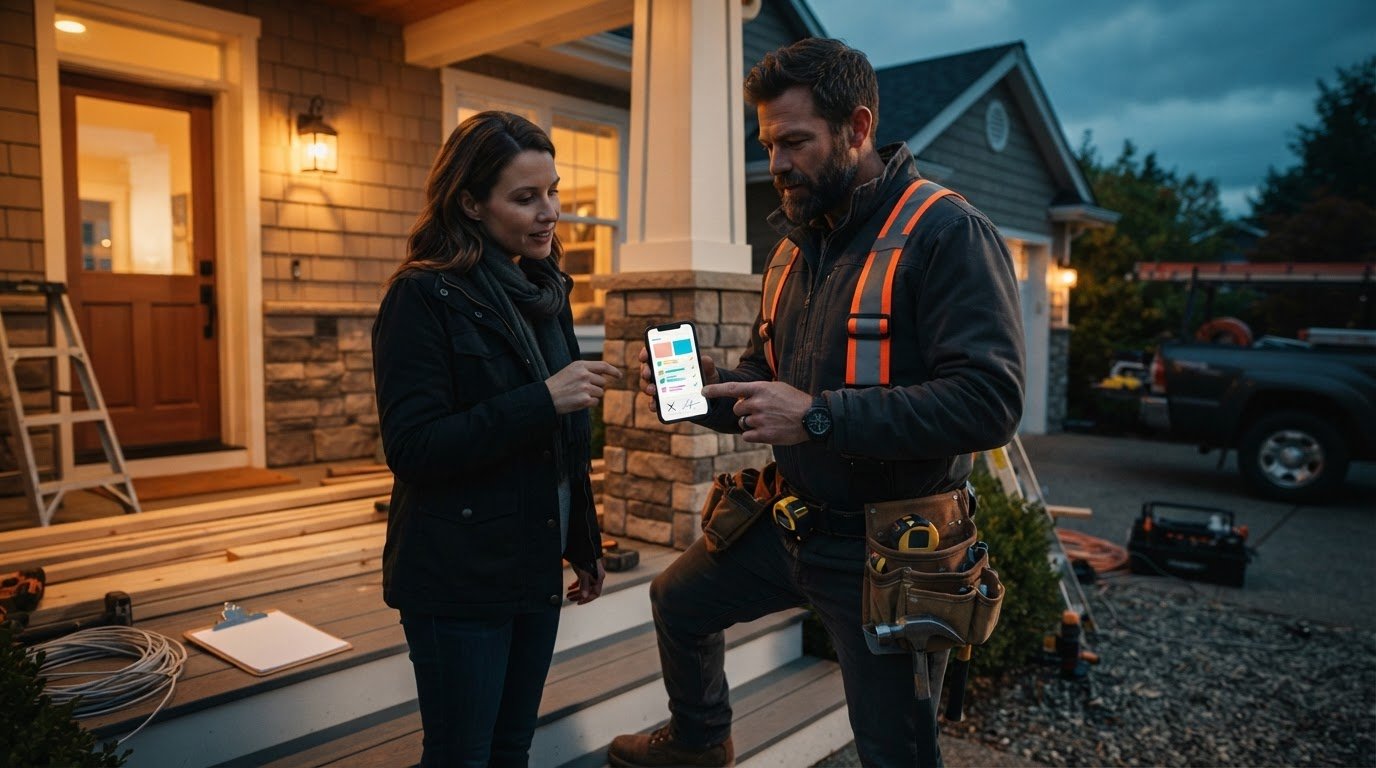
Hand your mobile screen directly to the client or send an instant link straight to their phone. Let them review the itemized materials, labor allowances, and job photos side-by-side with you. If they question a specific price, point directly at the workspace. Showing the rusty panel or cramped subfloor right in front of them validates the work immediately. Frame signing on site around securing real-world crew availability, telling them plainly that approving the estimate today locks in their target start date on your production calendar.
Securing the On-Glass Digital Signature
Turn the device toward the customer for a straightforward, on-glass digital signature. Modern federal standards under the ESIGN Act make these digital signatures fully legally binding for commercial contracts, giving your agreement the same legal weight as pen and paper. Once they sign, your system instantly fires off a branded confirmation copy containing the agreed-upon line items, site photos, and warranty terms directly to their inbox. Collecting their initial deposit right there locks the project into your active schedule without delay.
Eliminating the Post-Walkthrough Follow-Up Cycle
Chasing unreturned estimate emails wastes hours of prime working time every single week. When you leave without a signature, your bid sits in an overcrowded inbox alongside three other contractors. Closing in the driveway completely cuts out that administrative runaround:
- No awkward phone tag: Eliminate the days spent leaving voicemails asking if the client received your emailed PDF.
- Immediate material ordering: Move directly from the signed scope to pulling supplies and dispatching crews.
- Protected margins: Remove the pricing renegotiations that happen when customers sit on an estimate for weeks.
Stop letting billable hours slip away into evening admin work. Learning how to quote faster on job site assessments keeps your workflow moving forward in real time. Trade pros ready to eliminate follow-up friction can use Quote Commander to build, deliver, and close bids before leaving the driveway.
Take Back Your Evenings and Win the Driveway Close
Mastering how to quote faster on job site visits gives you back your nights and puts signed work on your schedule before competitors even open their laptops. You don't need complicated desktop software or hours of manual data entry to look professional. When you pair pre-set price assemblies with rapid field capture, bidding stops being an unpaid midnight chore. You inspect the workspace, verify your labor rates, and secure the project while buyer interest is high.
Stop wrestling with tiny phone keyboards and faded pencil notes. Quote Commander converts spoken walkthroughs and up to six job snaps directly into clean line-item bids across over 25 trade categories. Present your proposal side-by-side with the client, capture a legally binding on-glass signature in minutes, and order materials before you turn the key. Start your 7-day trial with Quote Commander and protect your hard-earned momentum today.
Frequently Asked Questions
Can you really produce an accurate quote in under five minutes on site?
Yes, you can build a precise proposal in minutes when your unit rates and material assemblies are configured before you arrive. Instead of calculating dimensions or item quantities by hand, a voice walkthrough populates your established assemblies automatically. Learning how to quote faster on job site visits relies on automated conversion rather than guesswork. You simply review the calculated totals, adjust any site access factors, and hand the device to the homeowner.
What happens if a job has hidden complications you cannot see during walkthroughs?
You protect your business by standardizing scope boundaries and exclusion clauses inside your proposal templates. Your initial bid covers visible components and standard working conditions. If your crew uncovers rotted subflooring, degraded wiring, or concealed plumbing issues behind a wall, trigger a formal change order before proceeding. Document the discovery with photos, explain the structural defect to the customer, and price the additional work as a separate signed addendum.
Will customers feel pressured if you present a price before leaving?
Homeowners appreciate prompt pricing because it respects their schedule and eliminates waiting. Delivering your bid in person is not high-pressure sales; it is clear communication. You walk through the line items together, verify the scope of work against the physical space, and answer questions directly. If they want time to think, leave the review link with them. Most clients prefer locking in a reliable start date immediately over waiting days for an email.
Do you need cell service on site to build and send proposals?
Modern field tools record your voice walkthrough and capture job photos directly on your device even without an active cellular connection. Once your phone catches a signal in the truck or back at the supply house, the captured data uploads and generates the final line items automatically. You can complete the full scope inspection in a dead zone, review the draft locally, and transmit the finished proposal the moment you regain service.
How do on-site proposals handle material price fluctuations?
You manage shifting supply costs by adding an explicit estimate expiration clause and maintaining a pre-set digital price book. Establishing how to quote faster on job site appointments requires up-to-date base assemblies. When lumber, copper, or PVC prices shift, updating the master cost database once adjusts all future field proposals automatically. Setting an estimate validity window, such as 14 or 30 days, protects your profit margin from unforeseen wholesaler increases.
Is an on-glass digital signature legally binding for trade work?
Yes, electronic signatures carry the same legal weight as traditional pen-and-paper contracts across the United States. The federal ESIGN Act and state-adopted UETA regulations confirm that digital agreements are legally binding when both parties demonstrate clear intent and consent to transact electronically. Generating an instant digital proposal with a timestamped on-glass signature and an audit trail provides solid legal protection for both you and your customer.
Frequently Asked Questions
Yes, you can build a precise proposal in minutes when your unit rates and material assemblies are configured before you arrive. Instead of calculating dimensions or item quantities by hand, a voice walkthrough populates your established assemblies automatically. Learning how to quote faster on job site visits relies on automated conversion rather than guesswork. You simply review the calculated totals, adjust any site access factors, and hand the device to the homeowner.
You protect your business by standardizing scope boundaries and exclusion clauses inside your proposal templates. Your initial bid covers visible components and standard working conditions. If your crew uncovers rotted subflooring, degraded wiring, or concealed plumbing issues behind a wall, trigger a formal change order before proceeding. Document the discovery with photos, explain the structural defect to the customer, and price the additional work as a separate signed addendum.
Homeowners appreciate prompt pricing because it respects their schedule and eliminates waiting. Delivering your bid in person is not high-pressure sales; it is clear communication. You walk through the line items together, verify the scope of work against the physical space, and answer questions directly. If they want time to think, leave the review link with them. Most clients prefer locking in a reliable start date immediately over waiting days for an email.
Modern field tools record your voice walkthrough and capture job photos directly on your device even without an active cellular connection. Once your phone catches a signal in the truck or back at the supply house, the captured data uploads and generates the final line items automatically. You can complete the full scope inspection in a dead zone, review the draft locally, and transmit the finished proposal the moment you regain service.
You manage shifting supply costs by adding an explicit estimate expiration clause and maintaining a pre-set digital price book. Establishing how to quote faster on job site appointments requires up-to-date base assemblies. When lumber, copper, or PVC prices shift, updating the master cost database once adjusts all future field proposals automatically. Setting an estimate validity window, such as 14 or 30 days, protects your profit margin from unforeseen wholesaler increases.
Yes, electronic signatures carry the same legal weight as traditional pen-and-paper contracts across the United States. The federal ESIGN Act and state-adopted UETA regulations confirm that digital agreements are legally binding when both parties demonstrate clear intent and consent to transact electronically. Generating an instant digital proposal with a timestamped on-glass signature and an audit trail provides solid legal protection for both you and your customer.